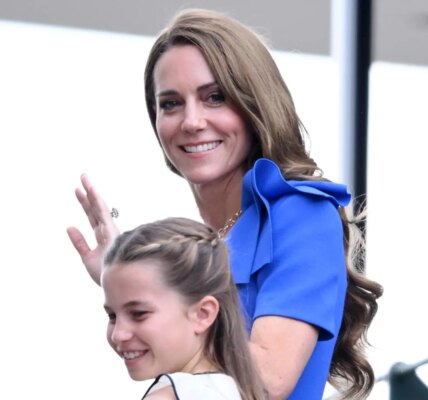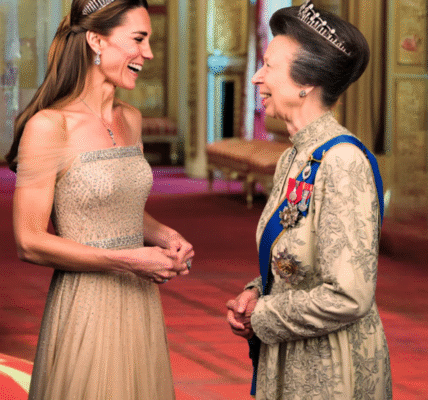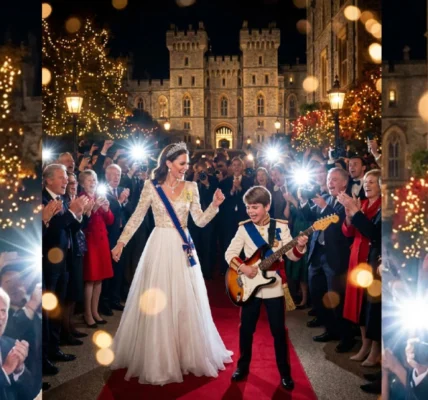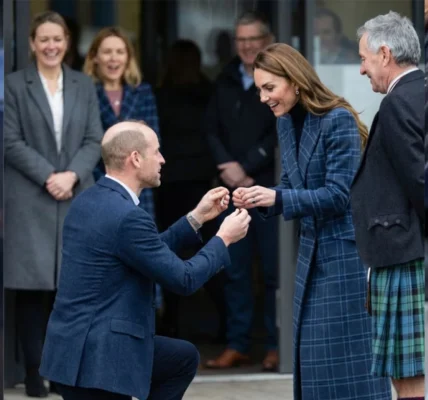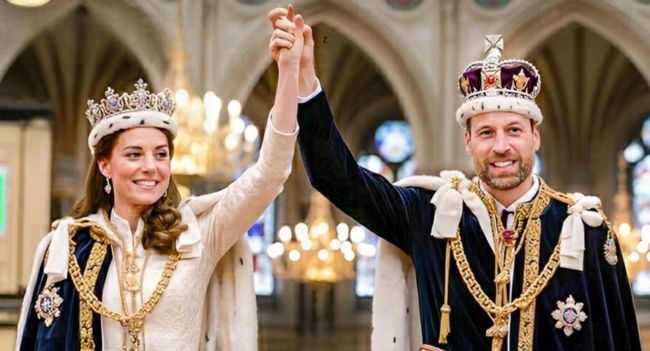
“That night, they stepped forward… no longer as heirs.” Westminster Abbey suddenly carried a different kind of atmosphere — solemn, but with a current running beneath every glance. William stood taller, less “prince,” more authority. Catherine was steady in a way that made people forget how much she’s had to carry behind the scenes. And then a moment that looked small on paper shifted the entire frame — a late entrance, an unscripted presence where it wasn’t expected… and the quiet question of rank, relevance, and who the monarchy truly revolves around started rewriting itself without anyone saying it out loud.

William and Catherine have sent shockwaves through the monarchy with their first official appearance as King and Queen, signaling a monumental shift in royal dynamics. Their poised presence at Westminster Abbey hinted at the future of the crown, leaving observers questioning the very fabric of royal tradition.
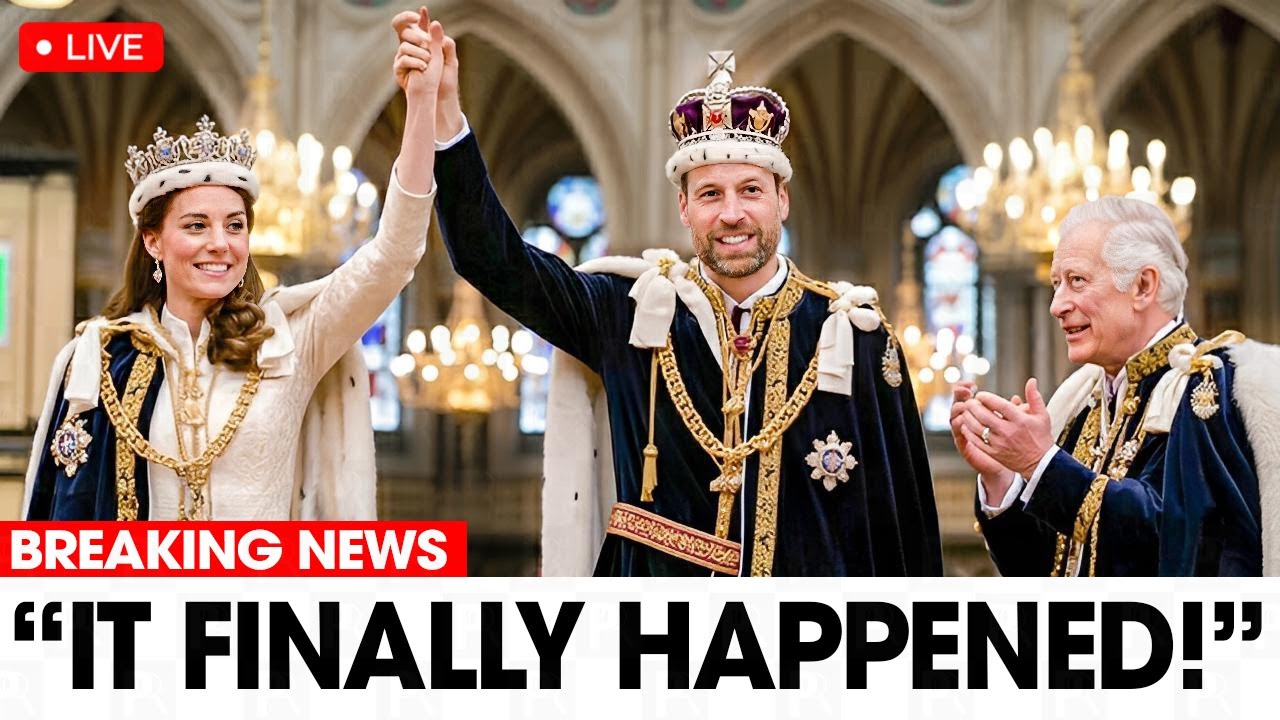 As the world watched, the couple emerged not merely as heirs but as the new faces of authority, embodying a sense of finality that reshaped expectations. William, once the restless prince, now stood with a composed confidence, reflecting years of preparation under Queen Elizabeth II and King Charles III. Catherine, having overcome personal challenges, radiated quiet strength, her every gesture reinforcing the monarchy’s resilience.
The atmosphere inside Westminster Abbey, traditionally a bastion of royal ceremony, felt charged with unspoken tensions. Speculation surrounding King Charles’s health loomed large, making this gathering a crucial moment for the crown. Yet, the absence of Queen Camila during the service sent ripples of uncertainty through the assembled royals, hinting at deeper rifts within the family.
 As the service progressed, a moment of unexpected disruption unfolded. Camila’s unplanned entrance shattered the carefully orchestrated ceremony, suggesting a struggle for relevance and authority. The tension was palpable as she crossed a line, breaching the visual sanctity that separated her from the Prince and Princess of Wales.
William’s reaction was subtle yet telling, a tightening of his jaw betraying the strain beneath his composed exterior. Catherine, ever perceptive, adjusted her presence instinctively, embodying the steadiness the monarchy required. This moment, rather than reinforcing unity, 𝓮𝔁𝓹𝓸𝓼𝓮𝓭 fractures within the royal family, revealing the delicate balance of power at play.
The aftermath of this dramatic event reverberated through the palace walls. King Charles, keenly aware of the implications, swiftly recalibrated the royal hierarchy, quietly empowering William and Catherine as anchors of the monarchy. Camila’s public role diminished, reflecting a strategic shift that prioritized stability over personal loyalty.
As whispers of change spread throughout Buckingham Palace, the monarchy began to operate under a new rhythm. William and Catherine took on increased responsibilities, their leadership reflecting a modernized approach to royal duties. The once-fractured institution now appeared united, with the couple embodying the promise of a new era.
Public confidence surged as the monarchy adapted, shifting focus away from internal conflicts toward a renewed sense of purpose. The events at Westminster Abbey had served as a catalyst, transforming the narrative surrounding the royal family. William and Catherine’s poised demeanor and decisive actions resonated with the public, reaffirming their place as the future of the crown.
In a world captivated by royal 𝒹𝓇𝒶𝓂𝒶, this moment marked a turning point. The crown had not simply changed hands; it had settled where it belonged, signaling a future that felt both secure and promising. As the monarchy continues to evolve, one question lingers: how will this shift shape the royal family’s legacy in the years to come?