Today, a silent portrait spoke. Blood whispered secrets through a haunting melody. The palace walls finally wept. 💧

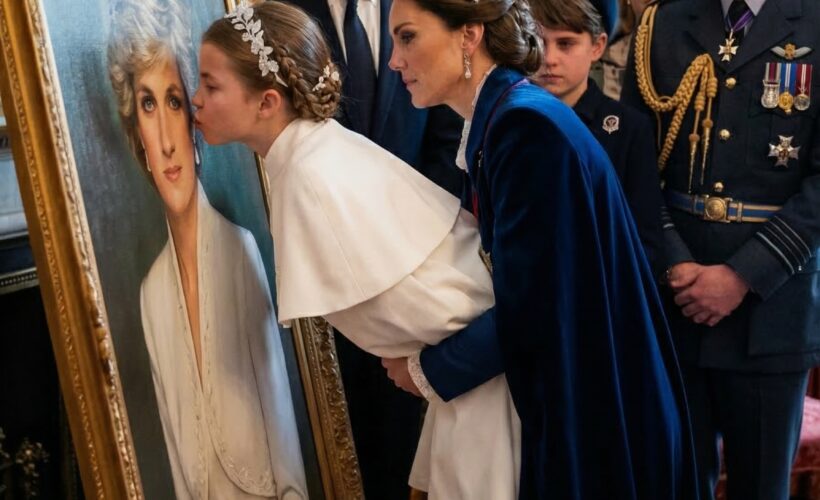
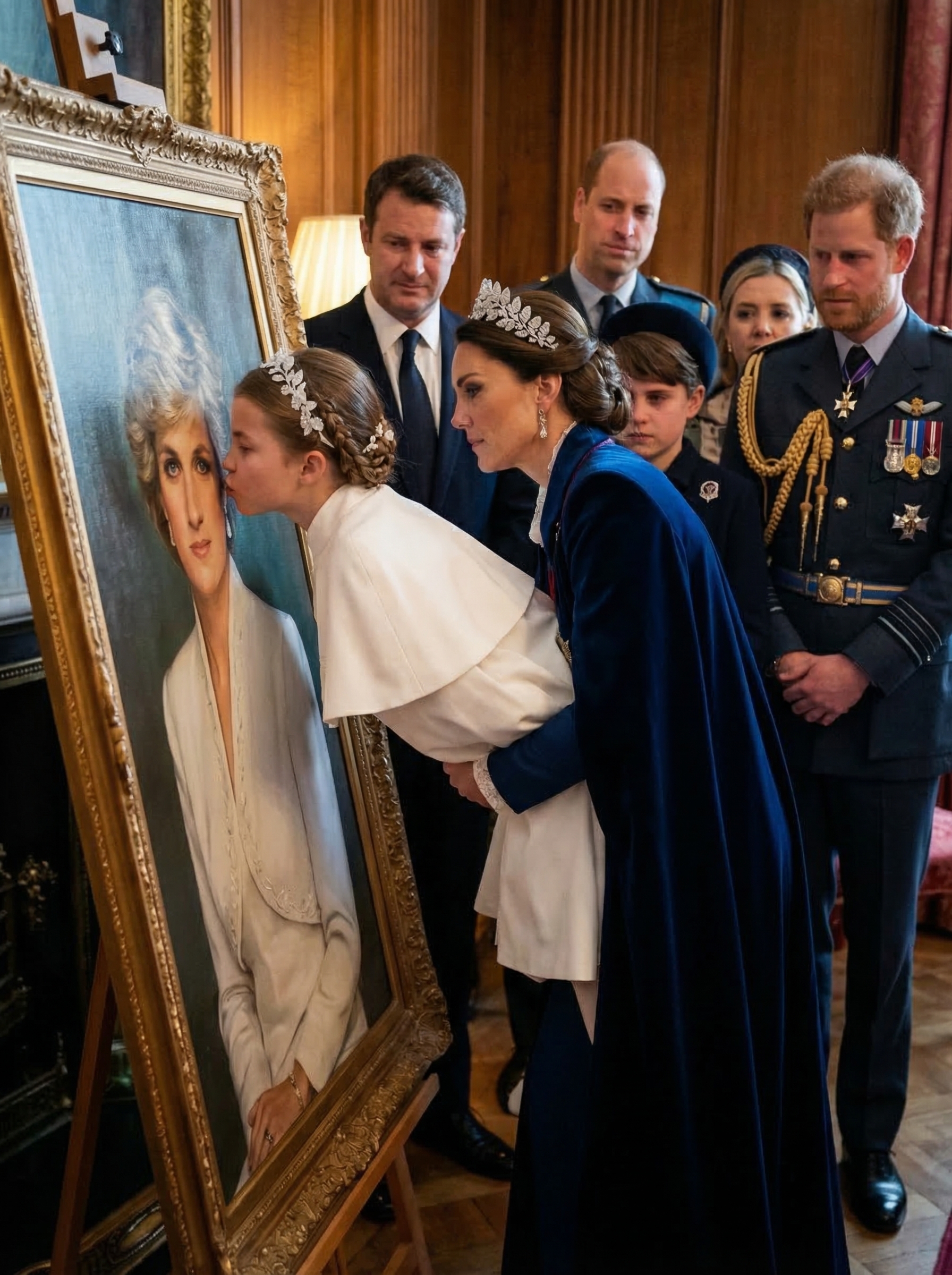
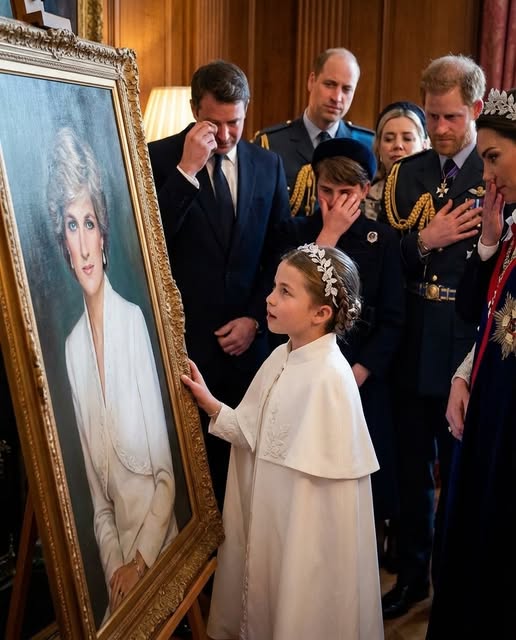
In the meticulously choreographed world of royal appearances, it is often the unscripted, quietest moments that resonate the most. Recently, a poignant scene unfolded that bridged the gap between a legendary past and a vibrant future. Princess Charlotte, the young daughter of the Prince and Princess of Wales, stood in solemn reflection before a portrait of her grandmother, Princess Diana.
Though she never had the chance to meet the “People’s Princess,” Charlotte’s choice to break the silence with a soft, melodic hum became a powerful testament to a legacy that refuses to fade. 🎶💖
🎨 The Portrait as a Portal to the Past
Portraits have always served as more than just a likeness; they are historical portals that capture the spirit of an era. Standing before the image of Diana—a woman whose life was a complex tapestry of public duty and private struggle—Charlotte engaged in a dialogue that bypassed words.
As art historian Dr. Judith H. Dobrzynski notes, “Portraits can evoke feelings of intimacy and familiarity, allowing the viewer to feel a connection with the subject, even if they have never met.” For Charlotte, this wasn’t just a painting of a historical figure; it was a mirror into her own identity and heritage. The brushstrokes provided a gateway for the young Princess to sense a connection that transcends the decades. 🏛️✨
🎶 The Neurobiology of a Simple Hum
Why did a simple hum move the room to tears? The answer lies in the profound relationship between music and the human brain. Unlike a rehearsed speech, humming is an instinctive, vulnerable act of self-expression.
According to neuroscientist Daniel J. Levitin, music activates the brain’s emotional centers, making it a “human obsession” that fosters deep interpersonal bonds. Charlotte’s melody functioned as an emotional conduit—a way to channel the love and curiosity she feels for her grandmother. This wasn’t a performance; it was an emotional release that invited everyone present to reflect on their own family histories and the universal experience of loss and remembrance. 🧠💓
🤝 A Shared Experience of Vulnerability
As the gentle notes of Charlotte’s humming filled the gallery, the atmosphere shifted. It wasn’t just the Royal Family who felt the weight of the moment; aides, friends, and onlookers were drawn into a collective state of grace.
Psychologist Dr. Susan Pinker, author of The Village Effect, emphasizes that shared vulnerable moments are the “glue” of human society. By witnessing Charlotte’s personal tribute, those present became part of a communal acknowledgment of grief and love. In a culture where royal emotions are often kept behind a “stiff upper lip,” this small act of humanity reminded the world that beneath the titles, the Windsors are a family navigating the same emotional landscapes as anyone else. 🌍🫂
📜 Weaving the Ancestral Thread
Anthropologists have long studied how we honor those who came before us. Dr. Barbara J. King suggests that remembering ancestors is vital for preserving the stories that shape our future. Charlotte’s humming is a modern way of “weaving” Diana’s story into her own.
By allowing herself to be moved by her grandmother’s image, Charlotte ensures that the values Diana stood for—compassion, transparency, and warmth—remain active participants in the monarchy’s next chapter. She isn’t just inheriting a title; she is inheriting a soul. 🛡️🌱
✨ Conclusion: The Lasting Resonance of a Single Note
Ultimately, Charlotte’s moment before the portrait serves as a beautiful reminder that love does not require a physical presence to endure. Her melody broke the silence of history, proving that the most meaningful tributes are the ones that come from the heart.
As the world looks toward the future of the British Monarchy, this single, resonant note from a nine-year-old girl reassures us that the legacy of the “People’s Princess” is in very tender, very capable hands. 🌟👑