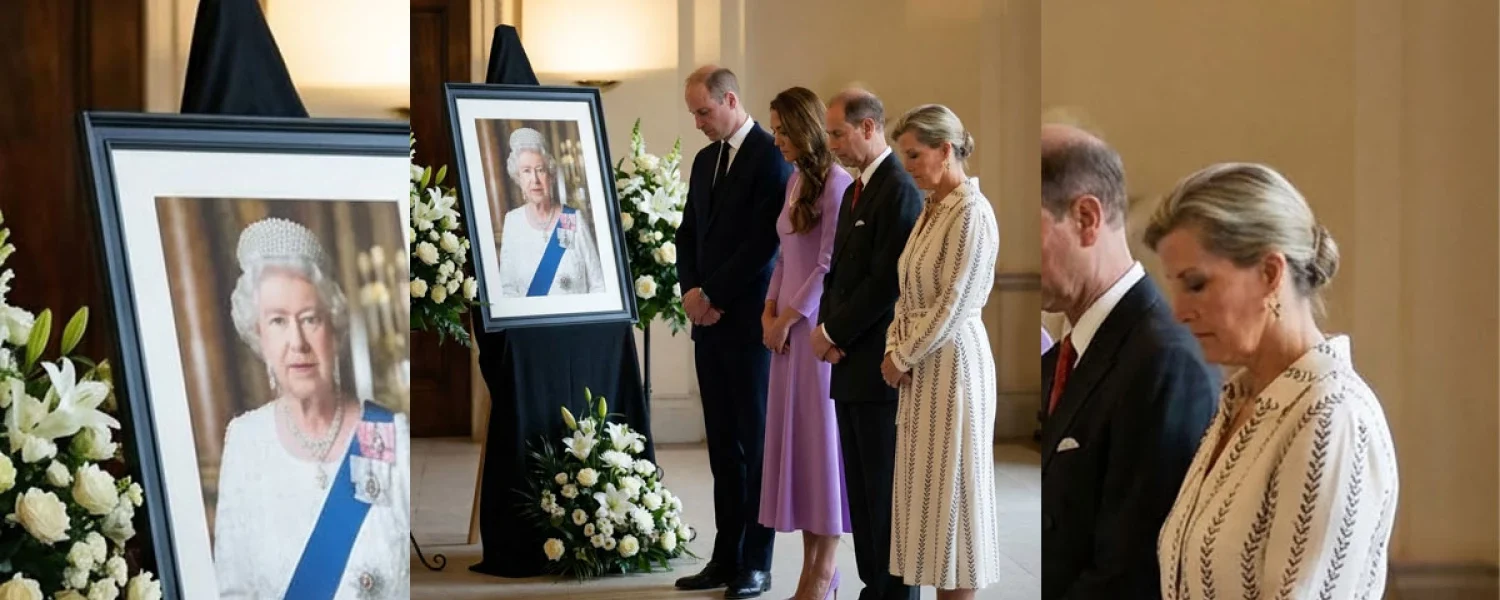

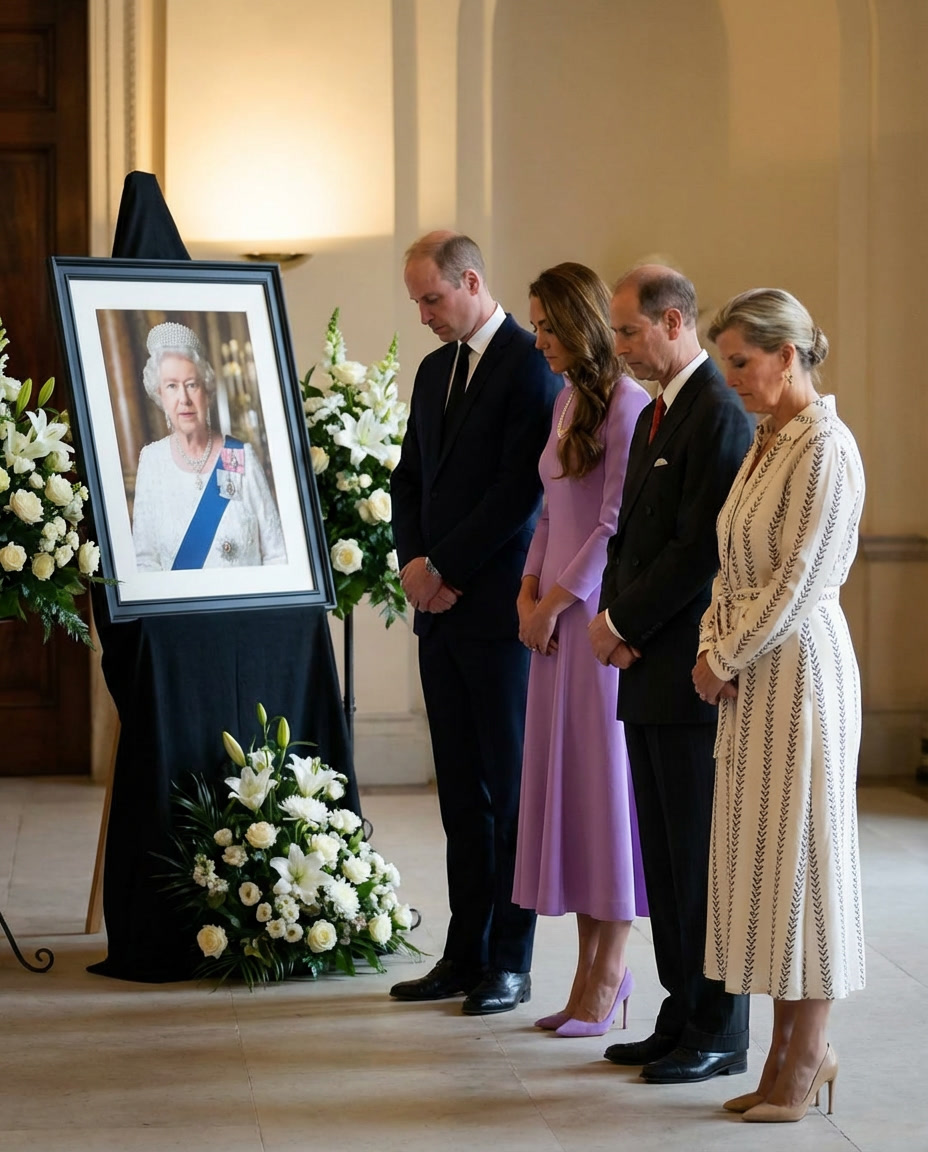
The image of the four royals paying their respects not only reflects their personal grief but also their shared commitment o upholding the values and traditions left by Queen Elizabeth. The scene encapsulates the deep bond they shared with their grandmother, highlighting the importance of family, duty, and honor in their roles. This tribute serves as a powerful reminder of the Queen’s enduring influence on the family and the nation, laying the groundwork for the revival of future generations.
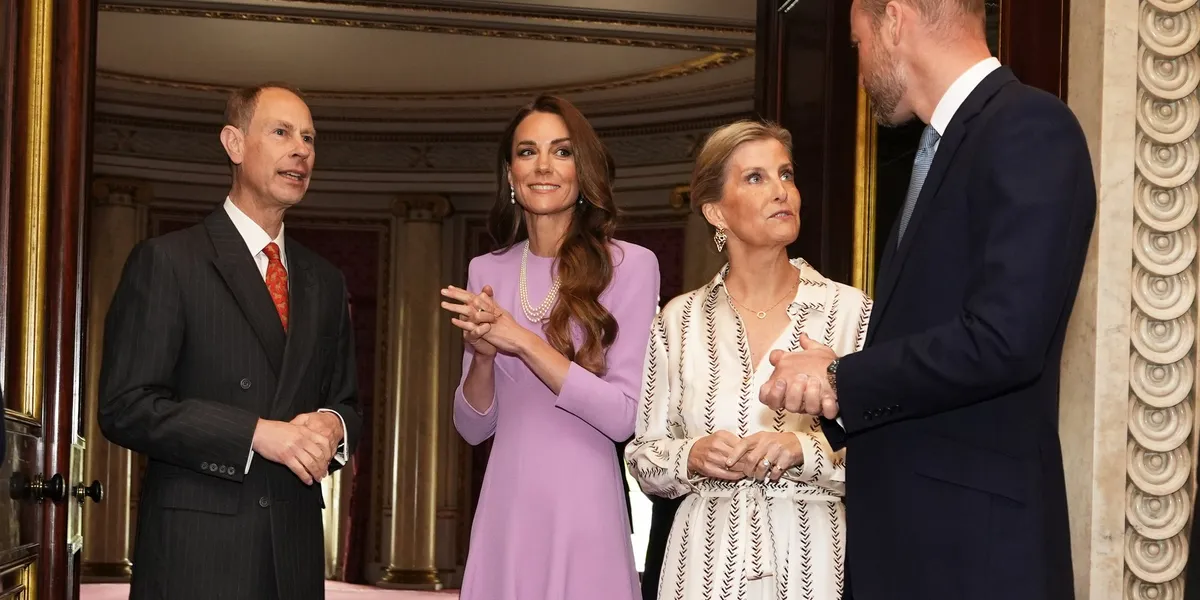
The Significance of a Royal Memorial Ceremony – Honoring the Queen’s Legacy
The act of commemorating Queen Elizabeth II through a collective gesture expresses more than mere mourning; it symbolizes the respect, admiration, and devotion that the royal family holds for her memory. This heartfelt remembrance reflects not only personal grief but also their shared responsibility to continue her legacy.
The significance of such a memorial ceremony extends beyond the immediate moment. It serves as a profound affirmation of the monarchy’s resilience and unity in times of change. As William, Catherine, Edward, and Sophie stood before the portrait, bowing their heads, they were not merely commemorating a personal loss but also reaffirming their vow to uphold their grandmother’s ideals of service, duty, and steadfastness.
This act resonated deeply with the public, evoking collective grief and reflection across the country. It served as a unifying symbol, reinforcing the people’s belief in the enduring nature of the monarchy and the development of social values. Historically, royal memorials have contributed to the continuity of tradition even as the monarchy adapts to modern times. The heartfelt remembrance of the four is a testament to this ongoing story—a silent promise to preserve their grandmother’s legacy for future generations.
The Importance of Funeral Unity in Royal Tradition
Funeral unity is a hallmark of royal tradition, demonstrating strength and cohesion during times of grief. For the royal family, such moments are crucial for showcasing resilience and emotional solidarity. The gesture of the four exemplified this principle, demonstrating the strength of their family bond and shared purpose.
Throughout history, royal families around the world have used public acts of remembrance to reinforce their collective identity. The enduring reign of the Queen, marked by stability and diplomacy, was often symbolized through such poignant moments. Today, the remembrance of William, Catherine, Edward, and Sophie echoes this history, underlining their role as guardians of her legacy.
The symbolic act of bowing before her portrait conveys a powerful image of humility and reverence, underscores their acknowledgment of her unparalleled influence. This affirmation of loyalty and love further solidifies their position as guardians of her values and mission. The act also signals to the public that, despite inevitable changes, the core principles guiding the monarchy remain steadfast and unwavering.
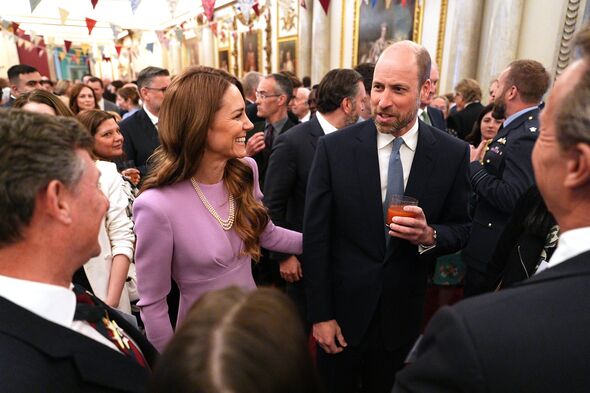
The Lives and Roles of William, Catherine, Edward, and Sophie – Shaping the Future of the Monarchy
The collective remembrance of William, Catherine, Edward, and Sophie is not merely a moment of mourning; it highlights their evolving roles and responsibilities within the royal hierarchy. Each member brought unique qualities, experiences, and contributions that shaped the future path of the monarchy.
William and Catherine, often seen as the future of the monarchy, represent a blend of tradition and modernity. Their public activities reflect the king’s evolving approach to diplomacy, social issues, and community engagement. Edward and Sophie, with their extensive experience and dedication, continue to be pillars of the royal family in stability and service.